PaintFlour
Peinture à la farine
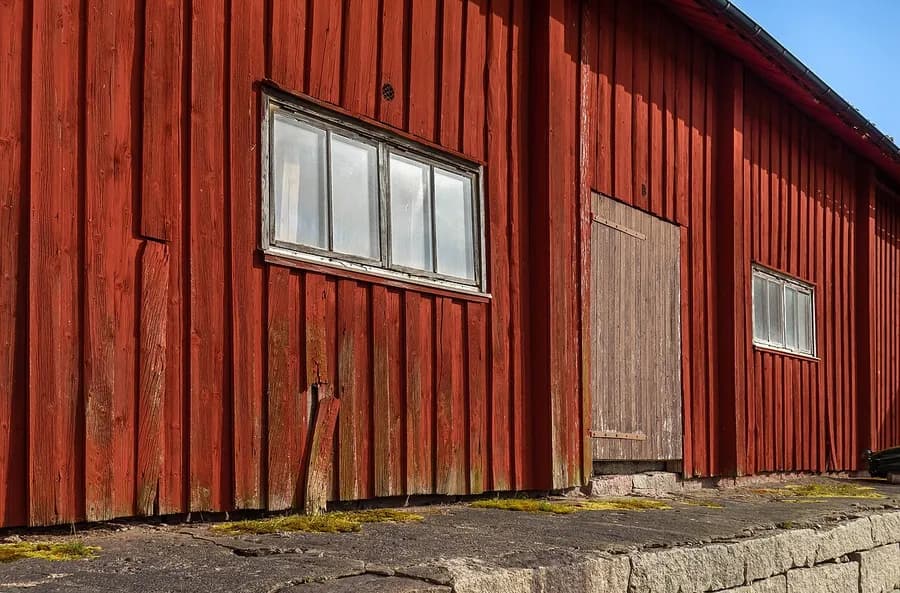
Swedish paint: a cooked flour porridge, made for exterior timber — cladding, shutters, outbuildings.
What it is made of
Rye or wheat flour boiled in water, iron sulphate, ochre (Falun red), linseed oil, black soap.
Application
The support
Bare sawn wood, or wood already in flour paint. Brush off old chalky coats; never over varnished or acrylic-painted wood.
Tools
Large pot, round brush, whisk.
Steps
- 1Cook the flour in water to a thick porridge, then add the iron sulphate and pigment.
- 2Stir in the linseed oil and soft soap, and cook a little longer.
- 3Apply warm, in two thick coats, in dry weather above 5 °C.
Drying
A day between coats; the surface stays slightly chalky, which is how it should look.
The trade’s general sequence, at about 20 °C. Where a producer publishes its own data sheet, that sheet wins.
Price
No producer in this catalogue sells this finish with a published price yet. It is described here for what it is; the catalogue will list it once a producer publishes one.
Upkeep
It does not flake, it erodes: another coat straight over the old one after 5–10 years, with no stripping.
- Demands · Periodic
- Vapour-open
On a real wall
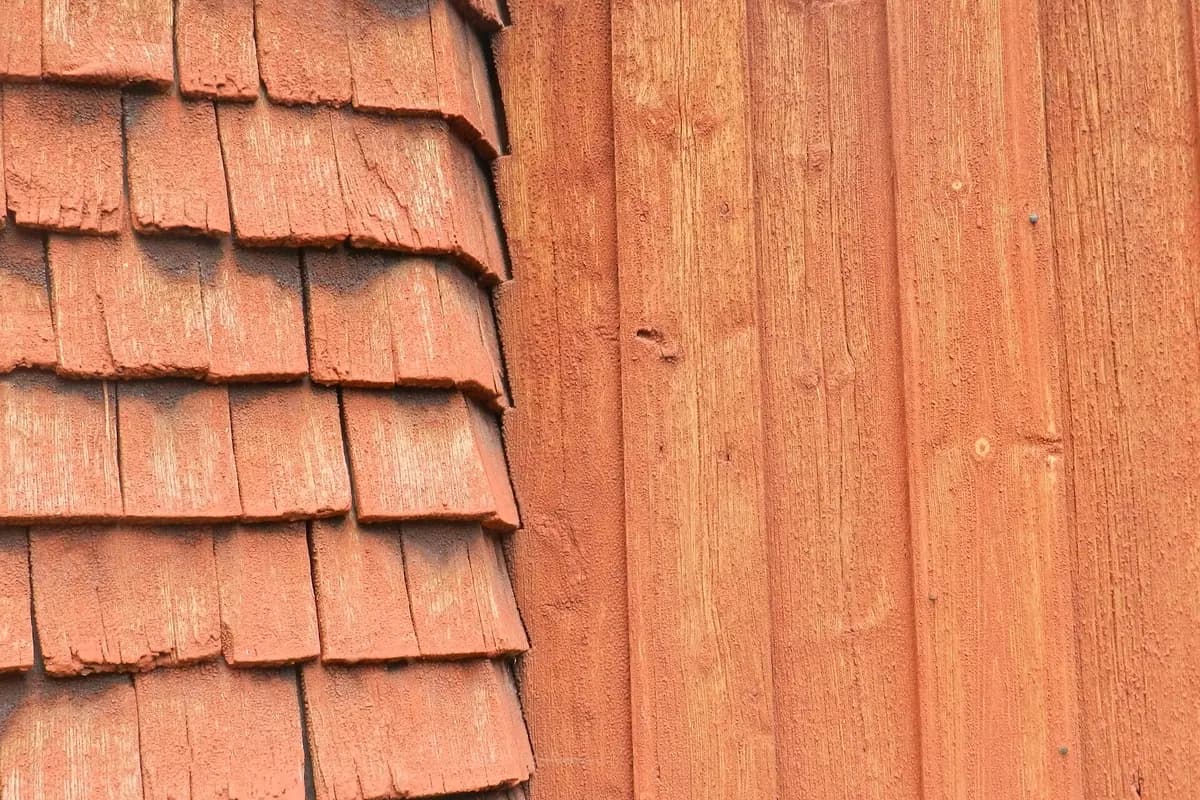
Flour paint on boards and shingles: matte, chalky, and it does not flake — it erodes.
Photo Zquid · CC BY-SA 4.0 · Wikimedia Commons