Lime, béton ciré, paint: which wall finish, and where it can go
A wall finish is two things at once: how thick it goes on, and what it is made of.
01The two questions
The trade's names mix the two, which is why they are so easy to get lost in. "Paint" and "render" only say the thickness — not what is inside. "Lime" and "cement" only say the material — not whether it goes on with a brush or a blade. The two cross freely: there is a lime paint and there is a lime render, just as there is a cement render — and that one is called béton ciré.
Thicknesswhat you see
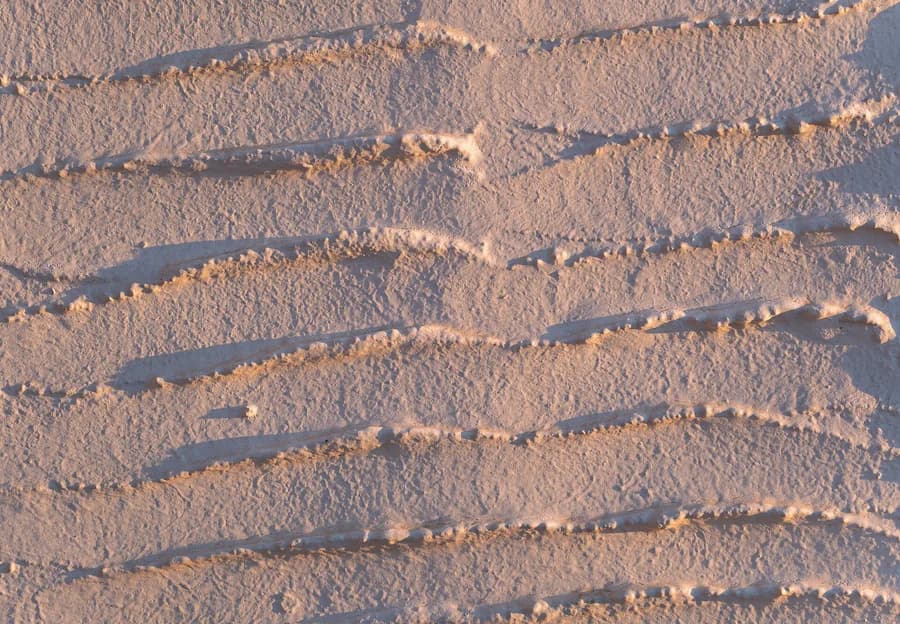
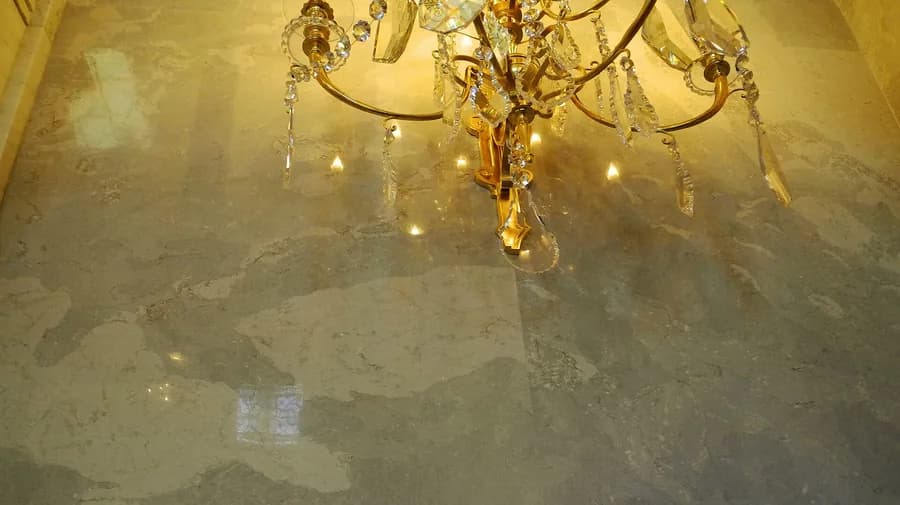
From 0.01 mm to 6 mm, and that is the whole difference between a colour and a material. At its thinnest, a lime wash lets the stone read through. A badigeon covers but keeps the grain of the wall. A render, laid off the blade, makes its own relief. A stucco, compressed until the surface closes, ends up giving light back. The thicker it goes on, the more the finish replaces the wall instead of tinting it.
Binderwhat the wall will stand
The binder is what holds the mix together: lime, cement, gypsum, clay, silicate, casein, flour or acrylic resin. Nobody sees it, and yet it is what decides whether the wall breathes, whether it takes water, whether it lasts outside and for how long. Two finishes of the same thickness with different binders have almost nothing in common.
The short version
Once the two questions are pulled apart, the rest follows on its own: thickness decides what you see, and the material decides what the wall will stand.
02The six words, decoded
Here is where the confusion comes from. The trade hands you six words — badigeon, render, stucco, tadelakt, plaster, paint — and they are not answering the same question: three name a thickness, two name a material, and "render" names a thickness while saying nothing about what is in it. So every shop name rewrites as a pair, thickness + material — and at that point it all falls into place:
The scale is logarithmic: each mark is ten times the one before. For reference, a sheet of paper is 0.1 mm, a bank card 0.8 mm and a 1 € coin 2.3 mm.
A badigeon is a lime paint.
Brushed, one to three tenths of a millimetre, water and slaked lime. It is not filed with the paints because the shop selling it is a lime shop — not because it is something else.
A béton ciré is a render.
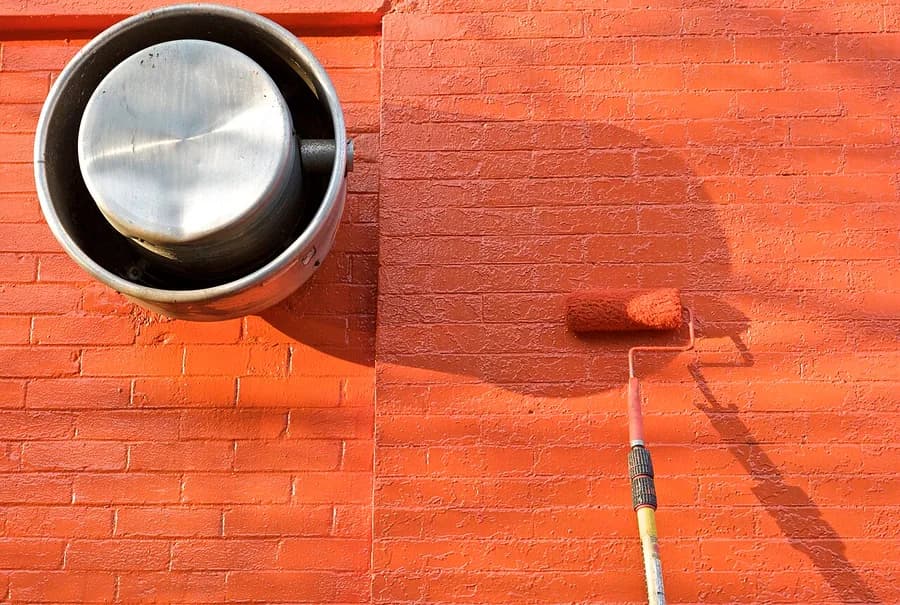
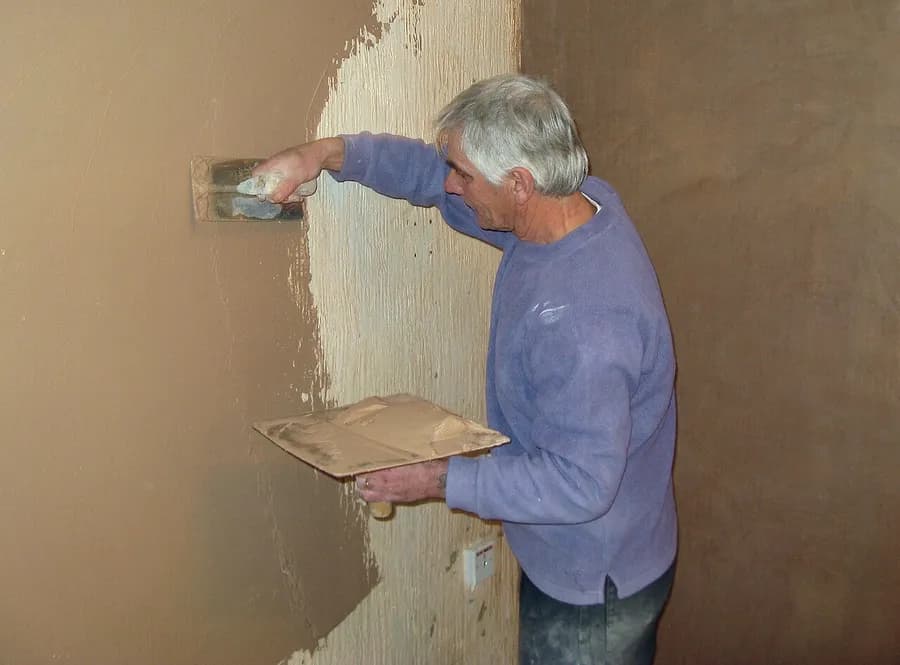
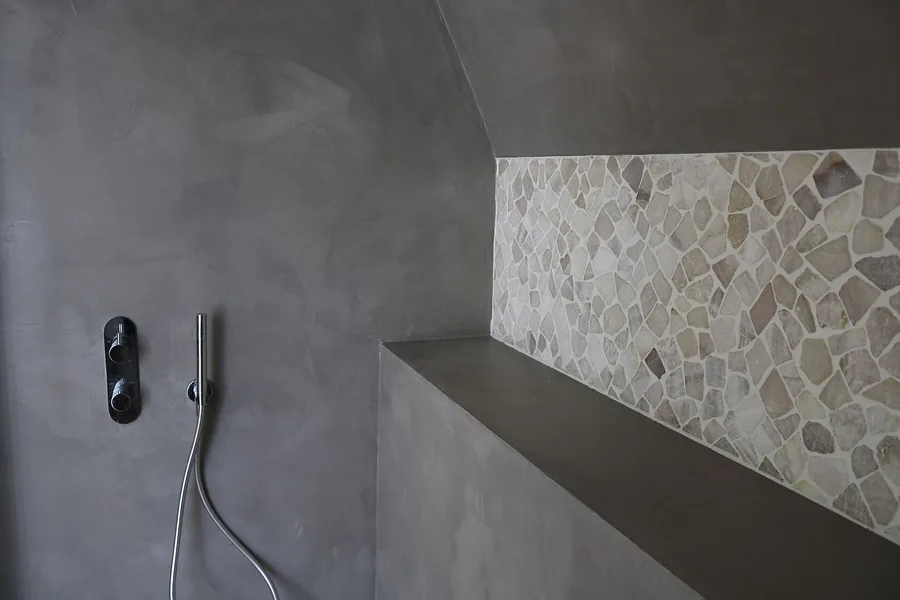
Trowelled at two or three millimetres, exactly like a lime render. What separates them is the binder — cement and polymer against lime — not the thickness.
Tadelakt is not a thickness, it is a recipe.
A lime stucco compressed with a river stone, then rubbed with black soap — and it is the soap, not the lime, that makes it waterproof. So "tadelakt effect" means a render that looks like it without going through the soap: the look, but not the waterproofing.
Two answers, and only one is mineral. Tadelakt holds because it is saponified; béton ciré holds because it is sealed, and under a shower it additionally wants a waterproofing system beneath it. Everything else on this page — badigeon, render, stucco, marmorino — takes a bathroom's steam and not the jet.
Outside, the binder decides and the frost gives the verdict. Hydraulic lime (NHL) hardens under water where air lime (CL) only sets in air: that is the dividing line. Silicate is the most durable mineral because it has no film to flake.
Almost nothing goes on a floor, and that is not an omission: a wall is not walked on. Béton ciré is made for it. Tadelakt goes there too — it has been the floor of hammams forever — but at the price of the upkeep that comes with it.
Then do not choose a fine lime or a clay. A lime render, a marmorino or a silicate ask for nothing for decades; a badigeon is redone, a tadelakt is soaped, a béton ciré is re-waxed.
04The fourteen finishes
All fourteen, in order: thinnest first, thickest last. Push through them — and to go into a family, each one now has its own page.
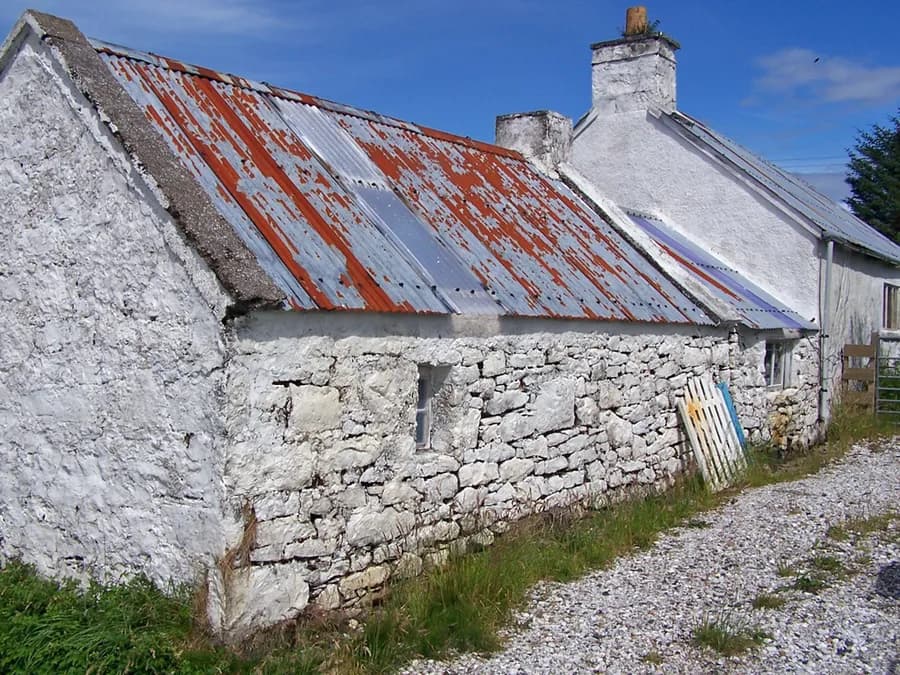
Lime wash
Eau-forte
Air lime (CL) · 0.02–0.05 mm
Lime at its most diluted — a coloured water that patinates without covering, leaving the stone or the render legible through it.
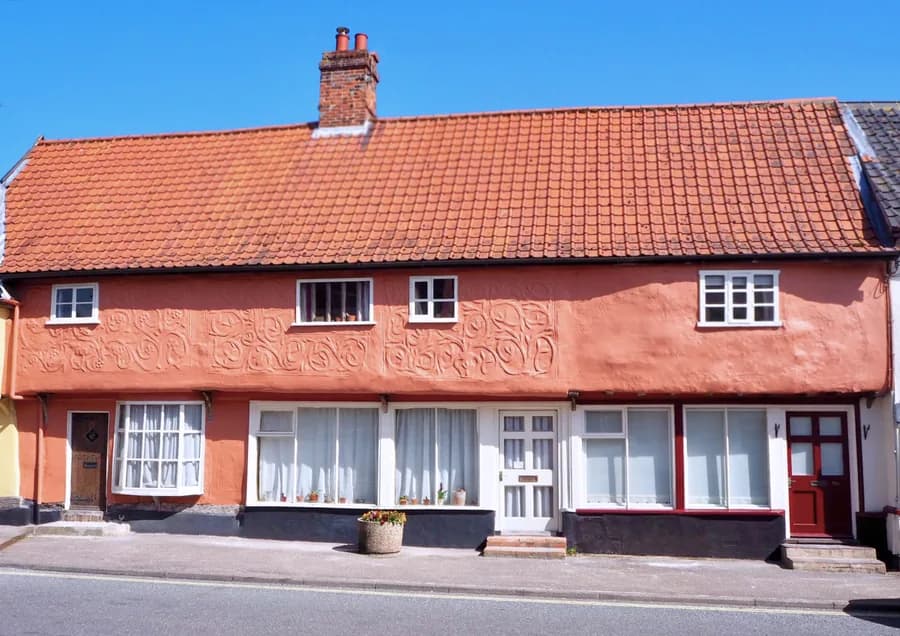
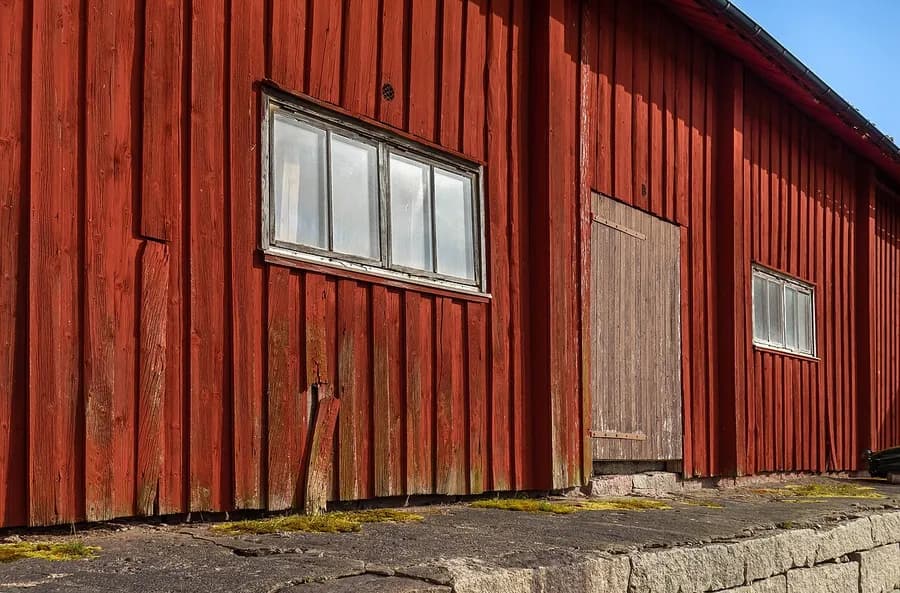
A cottage of 1600 in Ixworth, painted the traditional Suffolk pink of the county’s limewashes: the colour is in the coat, and the relief of the plaster still reads through it.
The one lime finish that takes running water — and it is the soap, not the lime, that makes it waterproof. The floor of hammams for centuries, walls and floors alike.
06What "breathable" actually means, and why it matters here
An old wall is not sealed and never had to be: damp rising from the ground or crossing the masonry evaporates through the surface. A mineral finish — lime, silicate, gypsum, clay — lets that vapour through; an acrylic film holds it back. The result is not a stain but a detachment: water gathers behind the film, freezes, and takes the render with it. It is also why these finishes go with a terracotta floor rather than against one — an unglazed tomette breathes, and the lime above it does the same thing.
07The names lie a little — what to check instead
Producers do not use these words the same way, and the catalogue carries the marks of it. Three cases where the name is not enough:
"Badigeon" and "lime paint" often name the same product — one is diluted by whoever applies it, the other arrives ready-mixed. Trade sources contradict each other on which is the harder of the two. The lime-to-water ratio says more than the name does.
"Tadelakt effect" is not tadelakt. A real tadelakt is waterproof because it is compressed with a river stone and then saponified with black soap; a render imitating the look needs, in its own producer's words, "a specific treatment" before it goes in a shower. The word to look for is soap, not tadelakt.
"Mineral render" names no binder at all. Lime, cement and gypsum are all mineral, and they do not hold in the same places. If the data sheet does not say which, the fact is not established — and this page does not guess it.
Compositions and ratios from trade references and the producers' own data sheets. The illustrations are drawn: what separates these finishes is a thickness and a reflection, which few photographs show.
 Lime wash