StuccoAir lime (CL)
Marmorino
The everyday Venetian stucco: two coats compressed with the blade, closing the surface without taking it to a shine.
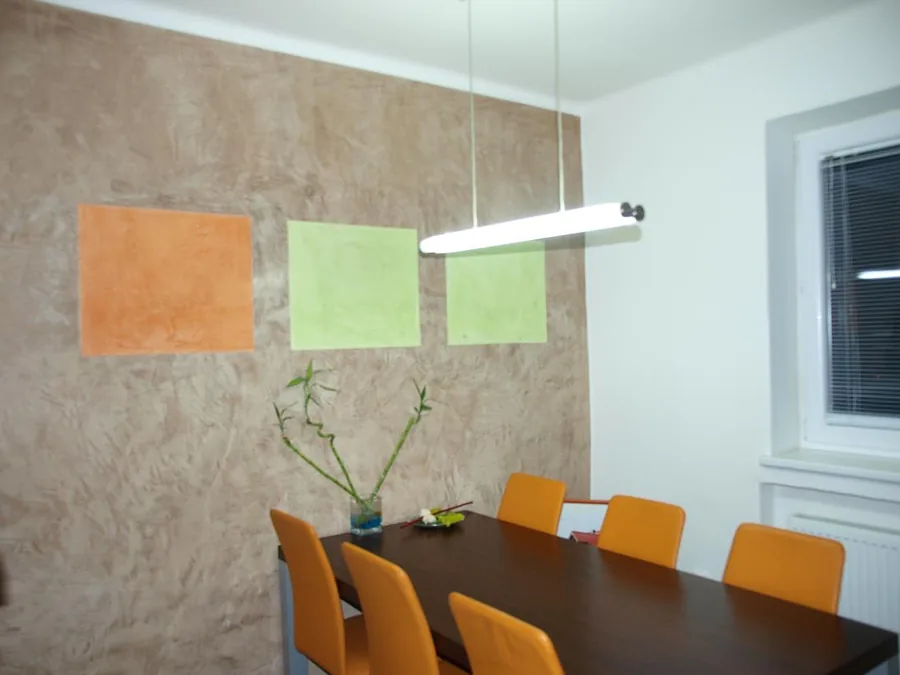
A whole wall in marmorino: the tinted lime keeps the cloudy track of the blade.
Photo Kubko666 · CC BY-SA 3.0 · Wikimedia Commons
At a glance
- Water
- Steam only
- Outside
- Exposed
- Floor
- Walls only
- Upkeep
- Almost none
- Vapour
- Vapour-open
What it is made of
Lime putty and marble powder of 0.4–0.8 mm, one volume each in the original recipe, mineral pigments; no additives.
Application
The support
A flat, sound mineral ground, ideally a lime render. On plasterboard, a filled bonding primer.
Tools
Steel finishing trowel (“blade”), Venetian spatula, float.
Steps
- 1A first, coarser marmorino coat, even, as the base.
- 2A second, finer coat laid “fresh on firm”.
- 3Compress with the blade in repeated passes until the surface closes and the satin comes up.
- 4Optional protection: soap, wax, or a mineral water repellent in a damp room.
Drying
Overnight between coats; carbonation continues for several weeks.
The trade’s general sequence, at about 20 °C. Where a producer publishes its own data sheet, that sheet wins.
Price
One product, from a single producer
Cheapest pot
65.83 €
5 kg
Per kilo, from
9.53 €
Per m², from
not published
| Product | From | €/kg · €/L | €/m² |
|---|---|---|---|
| Marmorino D prêt à l'emploiBiologement | 65.83 € | 9.53 €/kg | — |
Material prices incl. VAT as published by this catalogue’s producers, samples excluded. Labour is never included, and a price per m² only exists where the producer publishes a coverage.
Upkeep
No upkeep at all on a dry wall; a wax or a soap treatment makes it stand the steam of a bathroom.
- Demands · Almost none
- Vapour-open
On a real wall
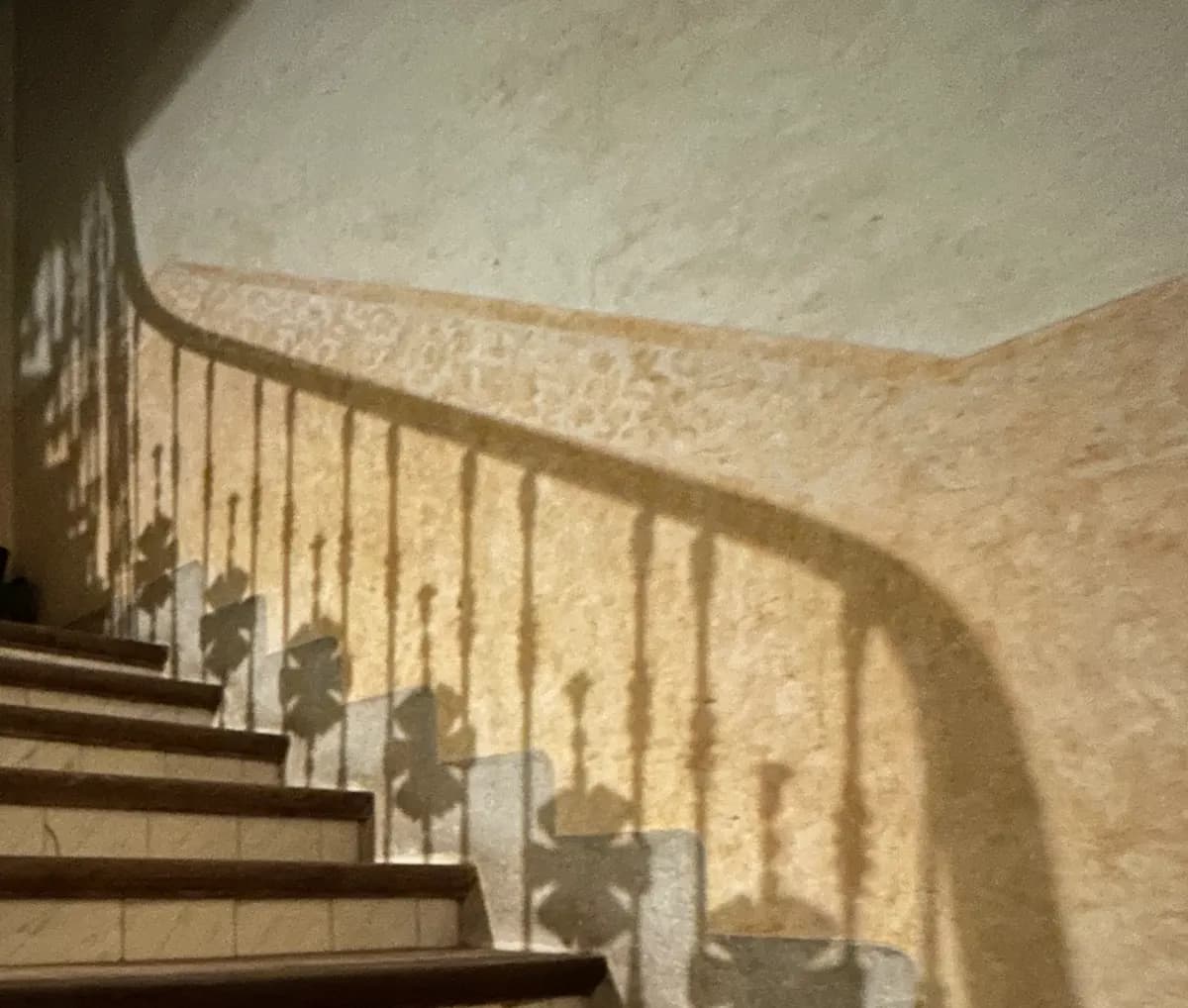
Marmorino in raking light: the track of the blade stays legible, and the satin comes from the compression, not from a varnish.
Photo CamillaStrong · CC BY-SA 4.0 · cropped · Wikimedia Commons