The whole guide

Paint: the finishes that colour a wall without replacing it

Under half a millimetre a finish does not replace the wall, it colours it. The support keeps its relief, its faults and its grain, and it is the binder — not the thickness — that decides everything else. Seven of this guide's fourteen finishes live in that band, from an eau-forte at two hundredths of a millimetre to an acrylic at one tenth.

On a real wall

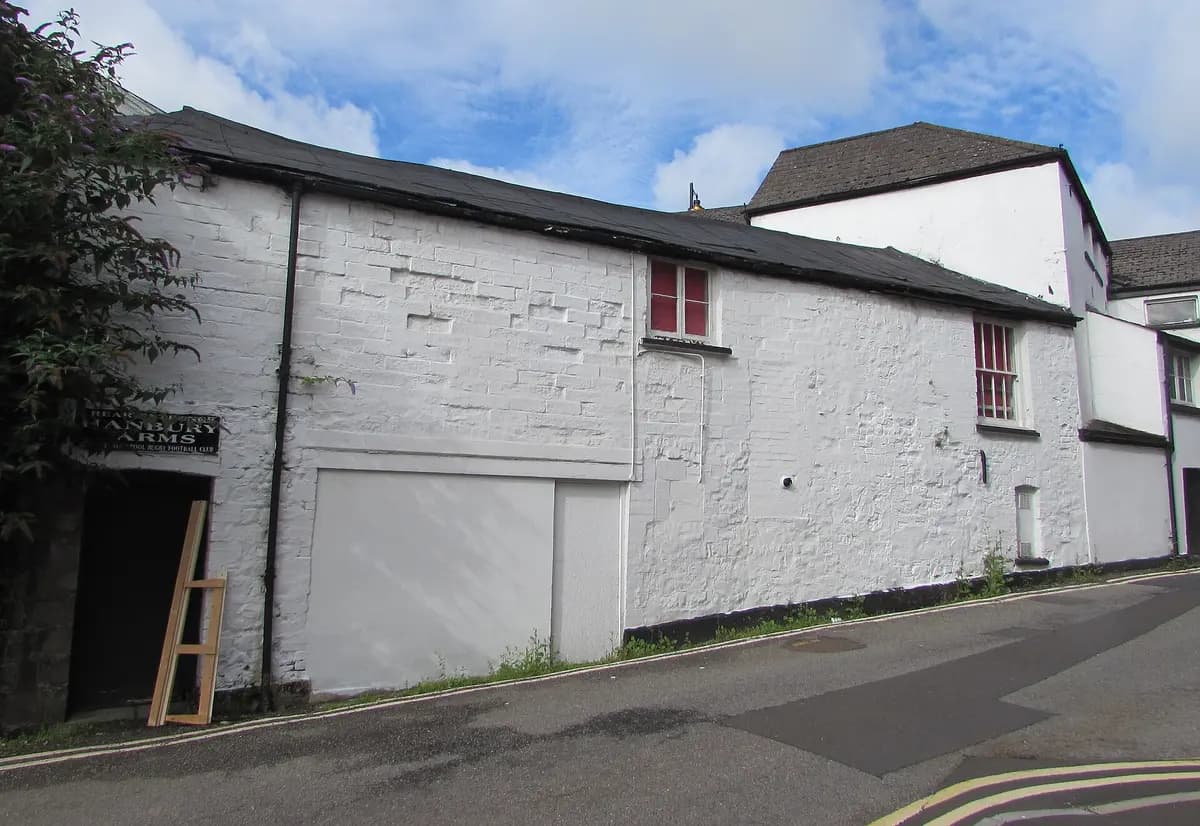
A lime badigeon over brick: at two tenths of a millimetre the coat covers the wall without erasing a single joint.

A lime badigeon over brick: at two tenths of a millimetre the coat covers the wall without erasing a single joint.

Photo Jaggery · CC BY-SA 2.0 · Wikimedia Commons

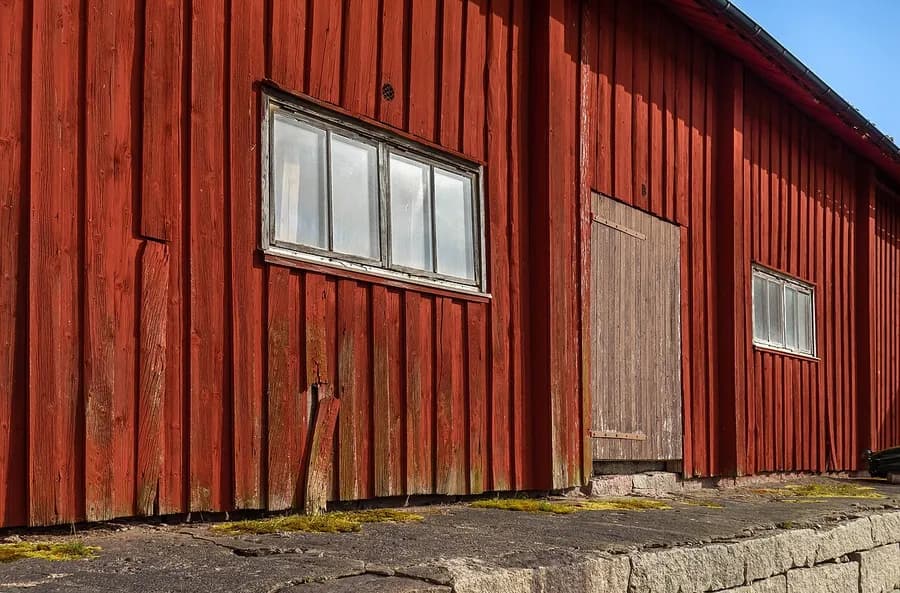
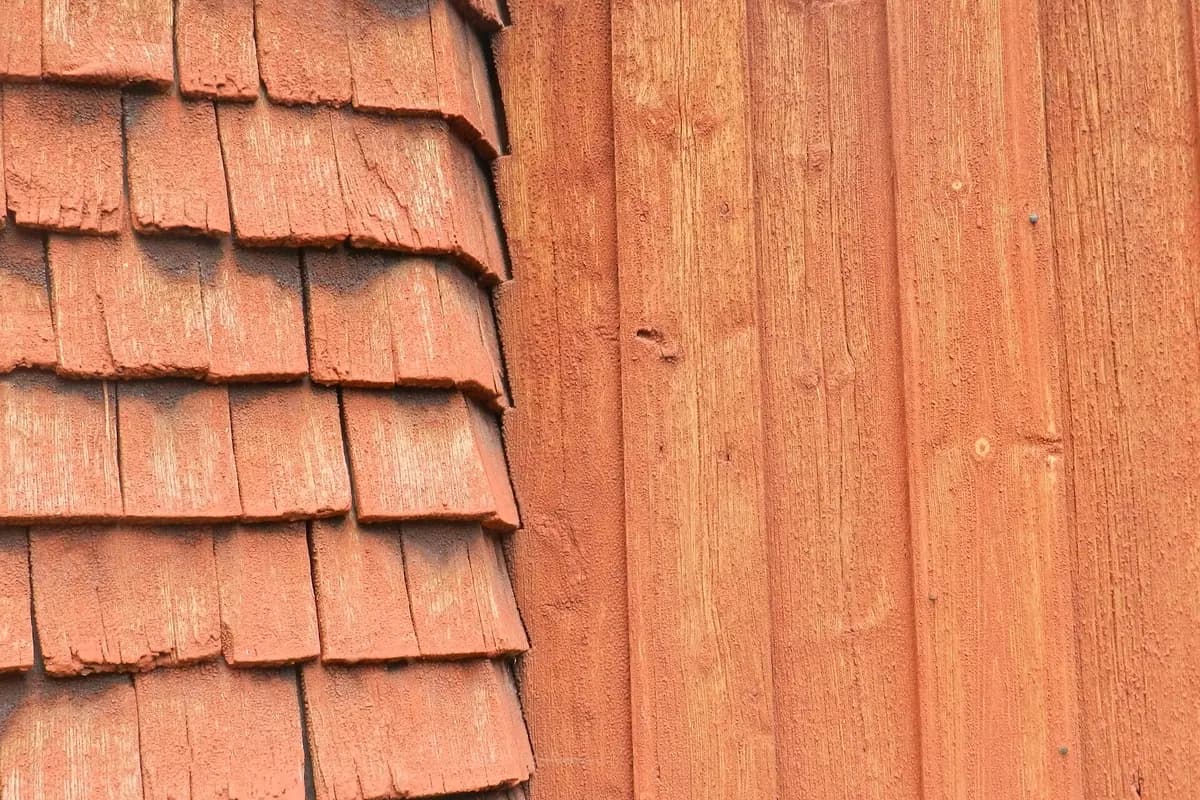
Flour paint on boards and shingles: matte, chalky, and it does not flake — it erodes.

Flour paint on boards and shingles: matte, chalky, and it does not flake — it erodes.

Photo Zquid · CC BY-SA 4.0 · Wikimedia Commons

How it goes on

All of them go on with a brush or a roller, in two coats, over a clean absorbent wall. What changes from one to the next is the dilution: the more water, the thinner the coat and the more of the wall reads through it. Three words name three dilutions of the same bucket of lime — eau-forte, badigeon, chaulage — not three different products.

Lime wash
Under a tenth of a millimetre — a patina, not a coat.
Badigeon
One to three tenths, with a brush. Covers without erasing the wall.
Paint
One even film in two coats, rolled or brushed.

The finishes in this family

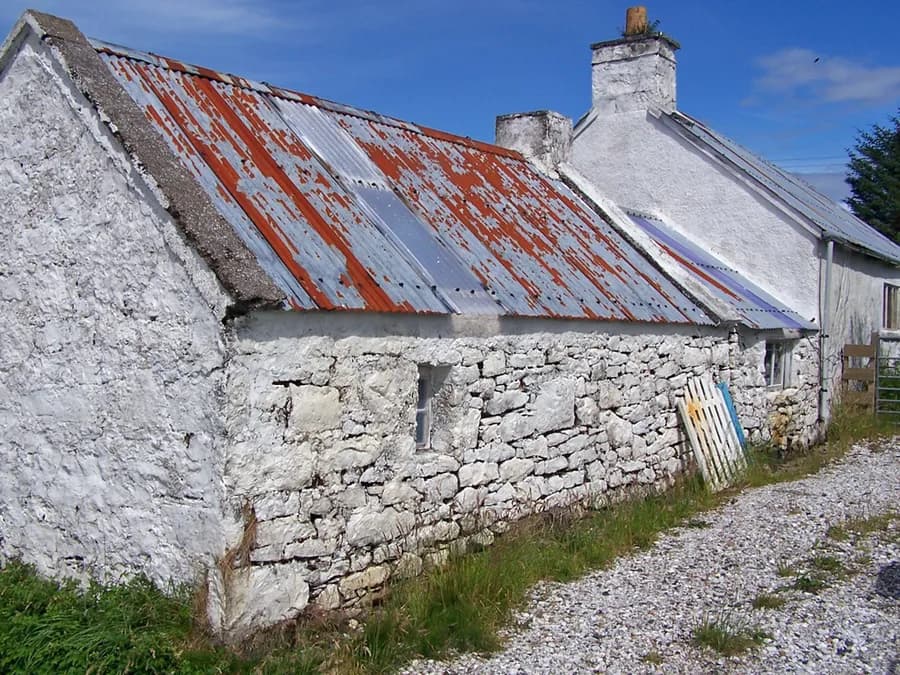
A very thin white wash over rubble, Isle of Skye: every stone still reads through the coat.Lime wash

Eau-forte

Air lime (CL) · 0.02–0.05 mm

Lime at its most diluted — a coloured water that patinates without covering, leaving the stone or the render legible through it.

Made of
1 volume of air lime to 6–10 volumes of water, pigments, sometimes a little alum as a fixative.
Upkeep
It chalks under a finger and is revived by another pass — there is no cleaning it, it is a patina you renew.
  • Keep it dry
  • Exposed
  • Walls only
  • Regular care
  • Vapour-open
Application, price and upkeep

A very thin white wash over rubble, Isle of Skye: every stone still reads through the coat.

Photo Richard Dorrell · CC BY-SA 2.0 · Wikimedia Commons
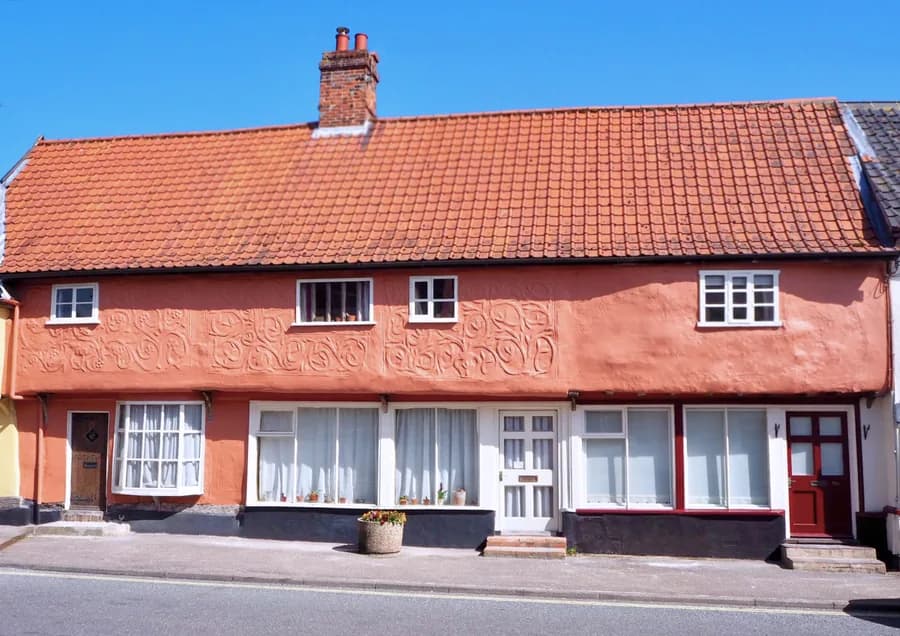
A cottage of 1600 in Ixworth, painted the traditional Suffolk pink of the county’s limewashes: the colour is in the coat, and the relief of the plaster still reads through it.Badigeon

Badigeon de chaux

Air lime (CL) · 0.1–0.3 mm

A lime paint, whatever its name suggests: brushed on thin, it keeps the grain of the wall and moves with the light.

Made of
1 volume of air lime to 2–4 volumes of water depending on how opaque you want it, pigments, marble flour or talc, sometimes casein as a fixative.
Upkeep
Dusted dry; a refresh coat every 3–5 years indoors, every 10–15 on a facade.
  • Steam only
  • Exposed
  • Walls only
  • Periodic
  • Vapour-open
Application, price and upkeep

A cottage of 1600 in Ixworth, painted the traditional Suffolk pink of the county’s limewashes: the colour is in the coat, and the relief of the plaster still reads through it.

Photo Sophie Curtis · CC BY-SA 4.0 · Wikimedia Commons

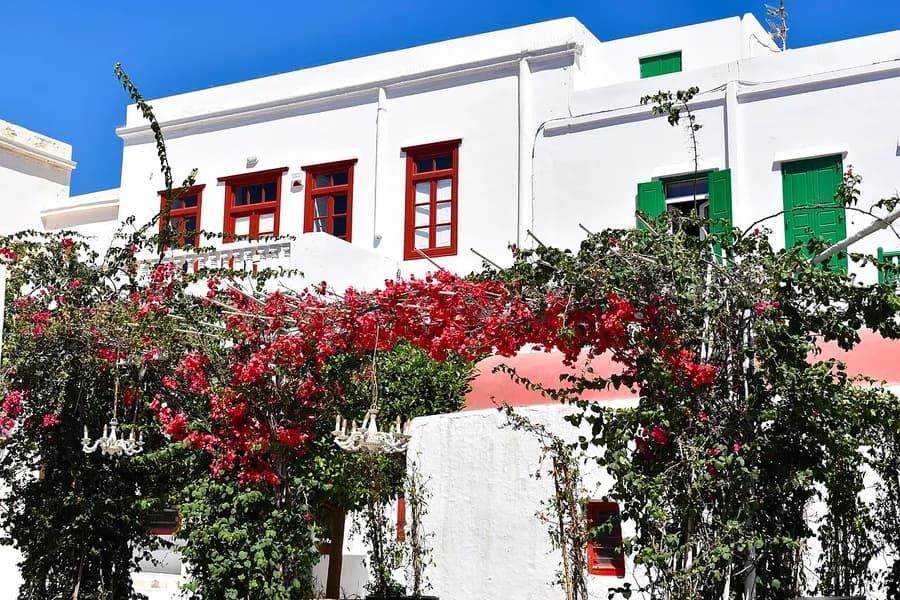
Mykonos: facades whitened again every year, in a tradition that was the tradition of lime.Paint

Peinture à la chaux

Air lime (CL) · 0.1–0.2 mm

The same material as a badigeon, sold ready-mixed and rolled on: more opaque, more even, and less alive.

Made of
Lime putty, mineral fillers, pigments and workability additives, batched at the factory for two coats without dilution.
Upkeep
A damp cloth on a fresh mark; it does not really wash, and it is touched up by recoating.
  • Steam only
  • Sheltered
  • Walls only
  • Periodic
  • Vapour-open
Application, price and upkeep

Mykonos: facades whitened again every year, in a tradition that was the tradition of lime.

Photo Julian Lupyan · CC0 · Wikimedia Commons

A Pellegrini mural in Basel, painted in Keim mineral colours in 1921–1923 and still outdoors.Paint

Peinture au silicate

Potassium silicate · 0.1–0.2 mm

The mineral paint that makes no film: it bonds chemically into a mineral substrate and becomes part of the wall.

Made of
Potassium silicate as the binder, mineral fillers (calcium carbonate, dolomite, talc), mineral pigments. Two forms not to be confused: pure silicate, two-component, which needs a mineral substrate and petrifies into it; and dispersion silicate, one-pot, with up to 5% organic content — the NF T 30-808 limit — which goes over a wider range of substrates.
Upkeep
The most durable mineral here: it takes gentle washing and lasts twenty years on a facade without flaking, having no film to flake.
  • Splashes
  • Exposed
  • Walls only
  • Almost none
  • Vapour-open
Application, price and upkeep

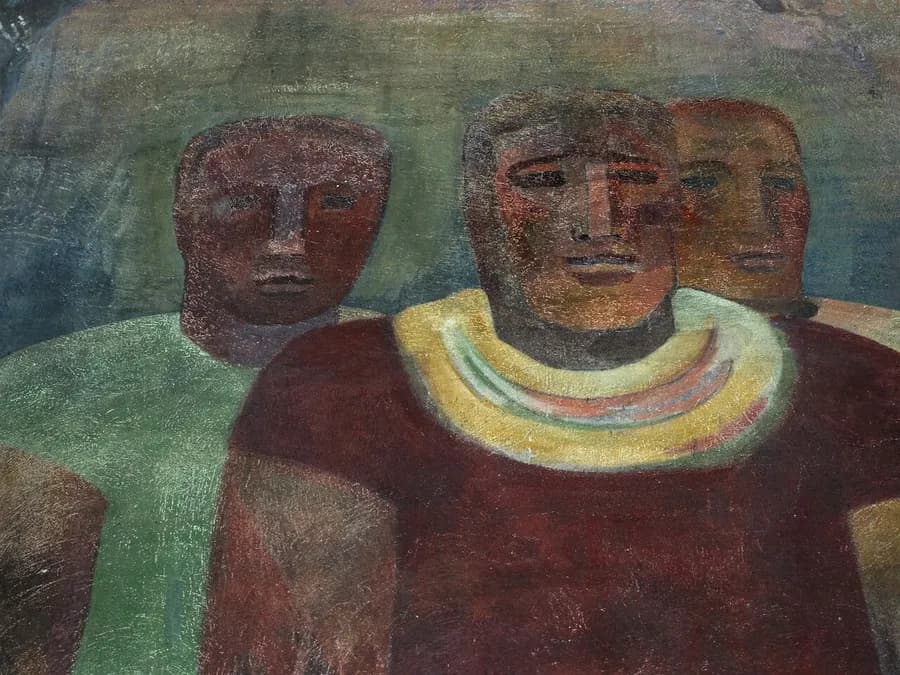
A Pellegrini mural in Basel, painted in Keim mineral colours in 1921–1923 and still outdoors.

Photo EinDao · CC BY-SA 3.0 · Wikimedia Commons

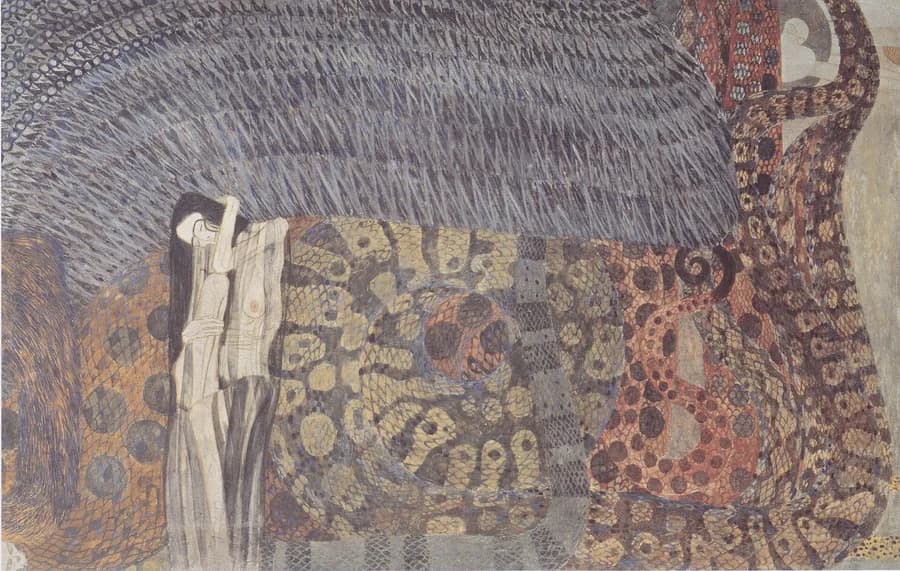
A panel of Klimt’s Beethoven Frieze at the Vienna Secession, painted in casein on plaster: matte, with a depth a film does not have.Paint

Peinture à la caséine

Casein · 0.08–0.15 mm

The old distemper — a milk paint, velvety and deeply matt, and strictly for dry rooms.

Made of
Casein (milk protein, or drained curd), air lime to set it, water, pigments.
Upkeep
It does not wash; it fears standing damp and grease, but it touches up invisibly.
  • Keep it dry
  • Indoors
  • Walls only
  • Periodic
  • Vapour-open
Application, price and upkeep

A panel of Klimt’s Beethoven Frieze at the Vienna Secession, painted in casein on plaster: matte, with a depth a film does not have.

Photo Gustav Klimt · Public domain · Wikimedia Commons

A Falu-red barn in Sweden: flour paint as it has been kept up for three centuries.Paint

Peinture à la farine

Flour · 0.1–0.3 mm

Swedish paint: a cooked flour porridge, made for exterior timber — cladding, shutters, outbuildings.

Made of
Rye or wheat flour boiled in water, iron sulphate, ochre (Falun red), linseed oil, black soap.
Upkeep
It does not flake, it erodes: another coat straight over the old one after 5–10 years, with no stripping.
  • Keep it dry
  • Exposed
  • Walls only
  • Periodic
  • Vapour-open
Application, price and upkeep

A Falu-red barn in Sweden: flour paint as it has been kept up for three centuries.

Photo W.carter · CC0 · Wikimedia Commons

A covering paint rolled onto brick: the relief stays, but the colour is the film’s.Paint

Peinture acrylique

Acrylic resin · 0.08–0.15 mm

The default paint, and this page’s counter-example: a resin film that covers, washes — and closes the wall.

Made of
Acrylic resins dispersed in water, titanium dioxide, fillers, preservatives and rheology additives.
Upkeep
The least demanding on the list: washable and long-lived, but vapour-tight, and therefore wrong on an old wall.
  • Splashes
  • Exposed
  • Walls only
  • Almost none
  • Closes the wall
Application, price and upkeep

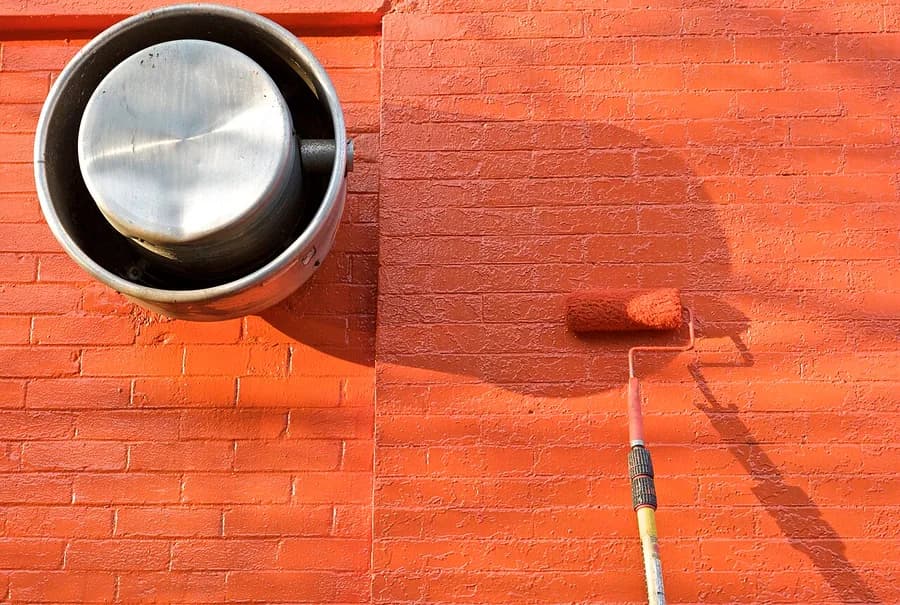
A covering paint rolled onto brick: the relief stays, but the colour is the film’s.

Photo Michael Cory · CC BY 2.0 · Wikimedia Commons

Where each one can go

ThicknessWaterOutsideFloorUpkeepVapour
Eau-forteLime wash0.02–0.05 mmKeep it dryExposedWalls onlyRegular careVapour-open
Badigeon de chauxBadigeon0.1–0.3 mmSteam onlyExposedWalls onlyPeriodicVapour-open
Peinture à la chauxPaint0.1–0.2 mmSteam onlyShelteredWalls onlyPeriodicVapour-open
Peinture au silicatePaint0.1–0.2 mmSplashesExposedWalls onlyAlmost noneVapour-open
Peinture à la caséinePaint0.08–0.15 mmKeep it dryIndoorsWalls onlyPeriodicVapour-open
Peinture à la farinePaint0.1–0.3 mmKeep it dryExposedWalls onlyPeriodicVapour-open
Peinture acryliquePaint0.08–0.15 mmSplashesExposedWalls onlyAlmost noneCloses the wall

Which one to choose

The choice is a choice of binder. Outside, silicate is the most durable of the minerals: it bonds chemically into the support and has no film to flake. In a dry room, casein gives the deepest matt. On exterior timber, flour paint erodes instead of flaking and is recoated without stripping. Acrylic is the only one on this page that seals the wall: washable, long-lasting, and to be kept well away from old masonry.

The other thicknesses