PaintPotassium silicate
Peinture au silicate
The mineral paint that makes no film: it bonds chemically into a mineral substrate and becomes part of the wall.
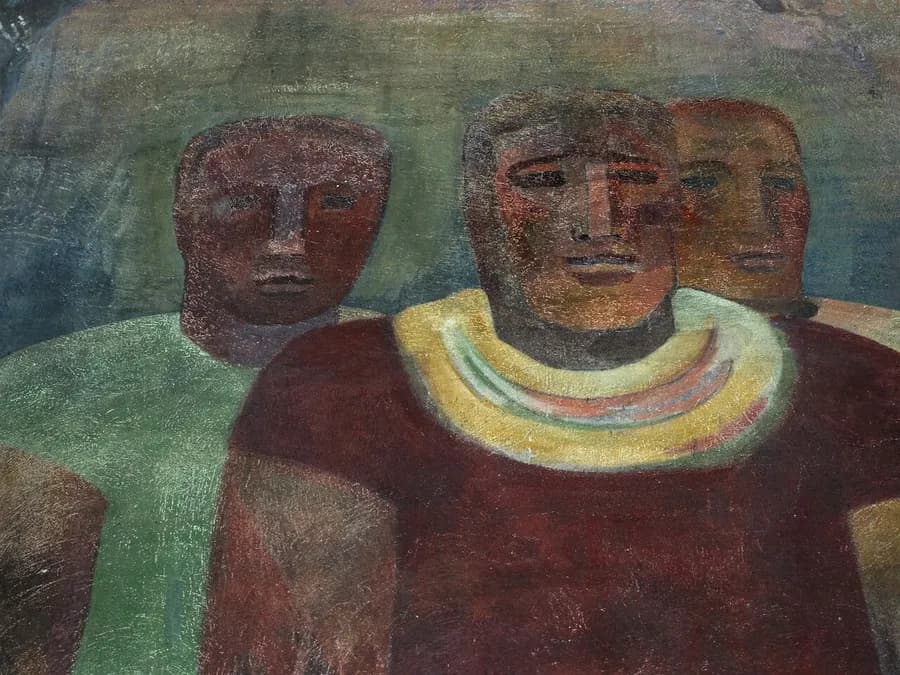
A Pellegrini mural in Basel, painted in Keim mineral colours in 1921–1923 and still outdoors.
Photo EinDao · CC BY-SA 3.0 · Wikimedia Commons
At a glance
- Water
- Splashes
- Outside
- Exposed
- Floor
- Walls only
- Upkeep
- Almost none
- Vapour
- Vapour-open
What it is made of
Potassium silicate as the binder, mineral fillers (calcium carbonate, dolomite, talc), mineral pigments. Two forms not to be confused: pure silicate, two-component, which needs a mineral substrate and petrifies into it; and dispersion silicate, one-pot, with up to 5% organic content — the NF T 30-808 limit — which goes over a wider range of substrates.
Application
The support
A mineral support: render, concrete, stone, old mineral paints. Strip organic paints that flake; apply the silicate fixative of the same system. Mask glass and natural stone — silicate etches them.
Tools
Alkali-resistant brush or roller, gloves and goggles.
Steps
- 1Base coat: paint thinned with the system’s fixative, per the maker’s sheet.
- 2Finish coat neat, laid in one even pass per wall section.
- 3Never paint in full sun, in frost or on a soaked ground.
Drying
12 h between coats; silicification continues for weeks.
The trade’s general sequence, at about 20 °C. Where a producer publishes its own data sheet, that sheet wins.
Price
No producer in this catalogue sells this finish with a published price yet. It is described here for what it is; the catalogue will list it once a producer publishes one.
Upkeep
The most durable mineral here: it takes gentle washing and lasts twenty years on a facade without flaking, having no film to flake.
- Demands · Almost none
- Vapour-open